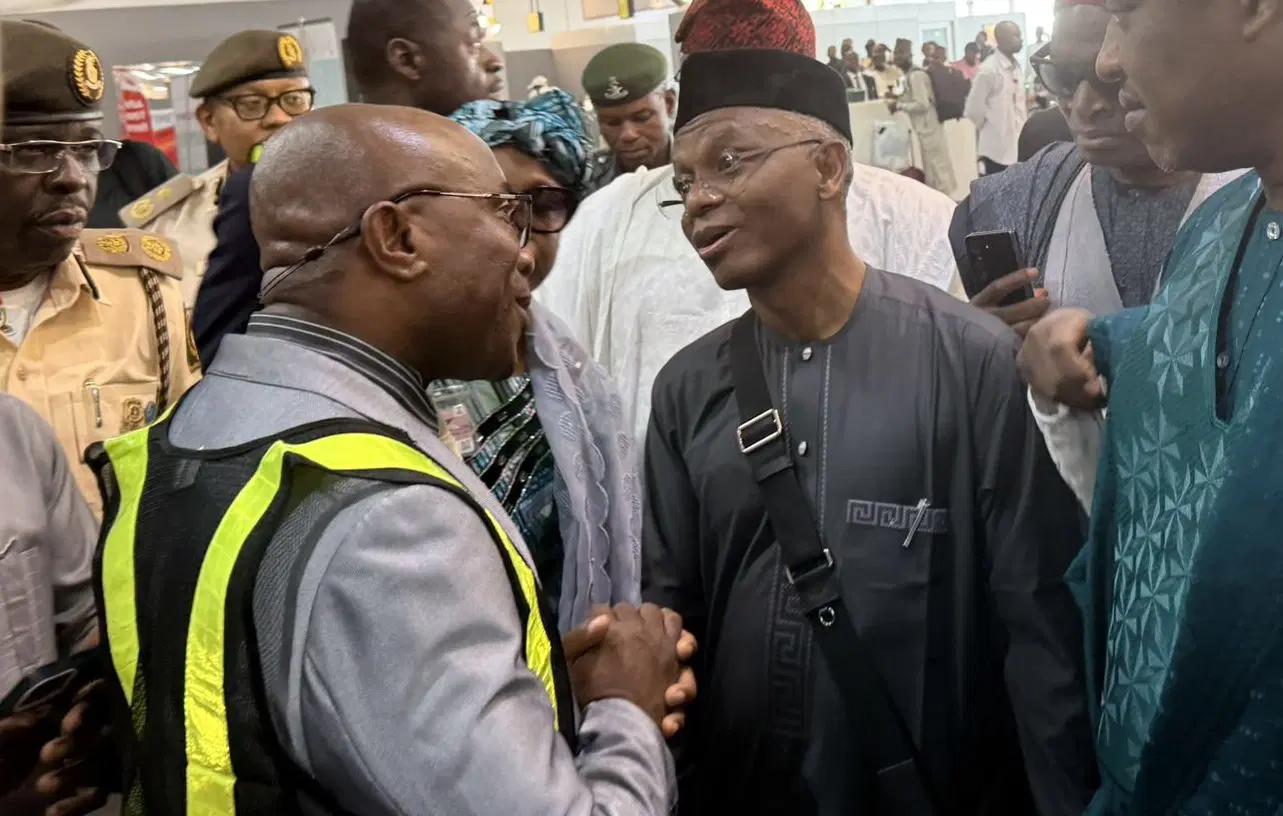
On Thursday, February 12, 2026, Nigeria witnessed a dramatic confrontation at Nnamdi Azikiwe International Airport, Abuja, involving former Kaduna State Governor Nasir El-Rufai. Upon his return from Cairo, Egypt, security operatives reportedly moved to detain him—sparking a major political controversy.
According to his media team, operatives attempted to arrest El-Rufai without a formal warrant or invitation letter, and in the process seized his international passport from an aide. The incident unfolded as he arrived back in the country, catching national attention.
🗣️ El-Rufai’s Response: Allegations, Defiance, and Legal Steps
Following the airport incident, El-Rufai took to social media and television to frame the encounter as politically motivated:
- He accused Nigeria’s National Security Adviser, Nuhu Ribadu, of being behind the attempted detention, claiming intercepted phone communications showed Ribadu ordering the action.
- In a televised interview, he acknowledged that someone had accessed and listened to Ribadu’s phone conversations—a move he admitted was illegal but argued was a common practice by the government itself.
- El-Rufai described the situation as an example of selective targeting of opposition figures by security agencies and political actors.
Despite the skirmish, he later confirmed he would honour an invitation from the Independent Corrupt Practices and Other Related Offences Commission (ICPC) for questioning and appear at its office in Abuja.
🧑⚖️ Legal Reactions and Wider Political Backlash
In the aftermath:
- El-Rufai’s legal team condemned the airport action as unlawful, arguing that no lawful procedure was followed and calling for his passport’s return and protection of his rights.
- Former Vice-President Atiku Abubakar visited El-Rufai in solidarity and called the ICPC’s actions partisan, criticizing what he described as politically motivated enforcement.
- Critics and civil society figures have offered varying takes—some dismissing the arrest claims as exaggerated while others warn against the perceived intimidation of political opponents.
Meanwhile, the Presidency has signaled interest in probing El-Rufai’s own statements regarding intercepting the NSA’s communications—a claim that has drawn sharp responses and calls for accountability.
📌 Why This Matters
The confrontation over El-Rufai’s return and the subsequent political and legal debate highlights broader concerns in Nigeria about:
- Rule of law and due process in high-profile cases
- The role of anti-corruption and security agencies in politically charged environments
- The balance between civil liberties and national security enforcement
As the story develops, it continues to spark intense discussion across political and civil society landscapes.
